
 View 12 Images


Dying Light has always thrived on its brutal melee combat system. There's something deeply satisfying about watching zombies literally fall apart under your blade, their grotesque bodies splitting open with each vicious swing. The weapon crafting system adds to this gory ballet, turning ordinary household items into comically overpowered killing machines. And let's not forget the fluid parkour that lets you dance just beyond the reach of snapping jaws and grasping claws.
But what happens when you introduce firearms into this intimate dance of death? Dying Light: The Beast poses this exact question - not with a few scattered pistols, but with an entire arsenal of shotguns, assault rifles and abundant ammunition. Surprisingly, the result isn't a straightforward shooter transformation. Instead, guns become another strategic layer in what's evolving into something closer to Crysis or (with some imagination) Dishonored - a playground where every encounter offers multiple solutions.
During my hour-long demo of an early mission, I quickly realized how much more tactical freedom this sequel offers. Playing as Kyle Crane, Dying Light's original protagonist who's been experimented on for 13 years by the mysterious Baron, I found myself infiltrating a rural factory operation. Standing on the facility's roof, my options felt exponentially broader than in previous games.
Tactical Evolution
The game's new "survivor sense" mechanic (a byproduct of Kyle's experiments) highlights enemies in orange (melee) and red (firearms), creating a color-coded threat assessment system reminiscent of Batman: Arkham. With this intel, I could plan my approach strategically - silently eliminating a bowman with a crafted shiv before claiming his weapon for myself.
Bows in The Beast become available much earlier than in Dying Light 2, offering crucial ranged stealth options. Sniping enemies from rooftops felt incredibly satisfying, especially when combined with the newfound mobility to retrieve dropped weapons mid-combat. The addition of slow-motion diving (though not quite Max Payne-level bullet time) adds cinematic flair while reinforcing Kyle's military background.
What's particularly impressive is how organically weapons integrate into existing mechanics. Rather than replacing melee combat, firearms complement it - allowing you to thin out gun-wielding threats before engaging in close-quarters mayhem. The addition of environmental hazards like explosive canisters creates dynamic combat scenarios where every tool in your arsenal has situational value.
Expanding the Playbook
Techland has significantly enhanced the stealth systems too. Beyond silent takedowns with bows and knives, players can now employ a clever (if disgusting) tactic lifted from The Walking Dead: smearing yourself with zombie guts to walk undetected through hordes. It's a simple but brilliantly thematic addition that adds another layer of tactical depth.
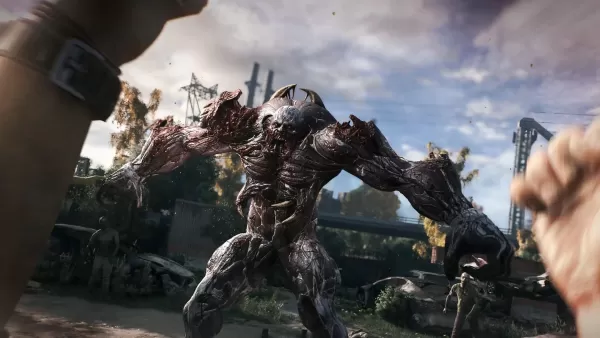
The real game-changer, though, is Kyle's transformation ability - the titular "Beast Mode." Filling through combat, this lets you unleash gory finishers straight out of Doom, complete with screen-clearing shockwaves. During my boss fight against a towering Behemoth (who hurls engine blocks like baseballs), activating Beast Mode turned the tide in spectacular fashion.
But what excites me most are the emergent possibilities. Playtesters have apparently used Beast Mode's enhanced jumping to bypass entire parkour sequences - exactly the kind of creative problem-solving that elevates sandbox games. Combined with new weapons like flamethrowers and electric traps (attached to unsuspecting zombies), The Beast seems poised to offer far more strategic variety than its predecessor.
While my demo was limited, the atmospheric improvements were immediately noticeable. Dynamic storms batter the rural setting with convincing force, while nighttime brings near-total darkness that forces careful use of your flashlight - a welcome return to form for fans of the original's terrifying nights.
AnswerSee ResultsHaving played the demo myself, my initial skepticism about firearms disrupting Dying Light's core identity has largely faded. Guns don't dominate - they enhance, supplementing rather than replacing the series' distinctive melee-parkour hybrid. Combined with expanded stealth options, environmental weapons, and radical new abilities, The Beast seems positioned to offer the deepest, most flexible combat system in the series yet.
The true test will be whether the full campaign maintains this diversity of approach. With unseen weapons like shock knives and an evolving mutation skill tree, there's exciting potential for The Beast to become the franchise's most sophisticated entry yet - provided it consistently delivers scenarios that reward creative problem-solving over brute force.